
 Blog
BlogHolibob's SDK Elements
How Holibob's SDK Elements approach gives you the power of an API integration at the speed of a widget.
· Adin Mathitharan

What the trade press said about our SDK, and the review from outside the industry.
What the trade press picked up on, and the review from outside the industry we keep rereading.
Selling experiences inside your own site or app used to take six months of engineering. Last week we launched the Holibob SDK, which brings that down to around three days, with more than 500,000 products in 190 countries behind it.
Travolution led with the line Craig used to explain why we built it: "For most brands, it was never demand that was missing. It was the build."
Travel brands already know their customers spend on tours, restaurants and shows once the trip is booked. Around 70% of activity bookings happen in the week before travel, while the brand is still emailing them about the flight or the room. The project to sell into that week rarely gets past the engineering queue, and that is what has kept most brands out.
PhocusWire picked up that the SDK is free to build with and live in sandbox now. Breaking Travel News carried the wider numbers, including the 35% higher repeat booking rate among brands that sell the whole trip. Short Term Rentalz wrote it up for accommodation operators, for whom the confirmation and pre-arrival emails are the obvious place to start.
The piece we've reread most came from outside the travel press. Christopher Mitchell of MitchellCo wrote about how SDKs should be designed and used ours as his main example. His phrase for it was "a paved road with exits".
His argument is that a good SDK makes the common path quick without trapping you on it. When you need something it doesn't do, you should be able to step off and work with the API directly, without starting again.
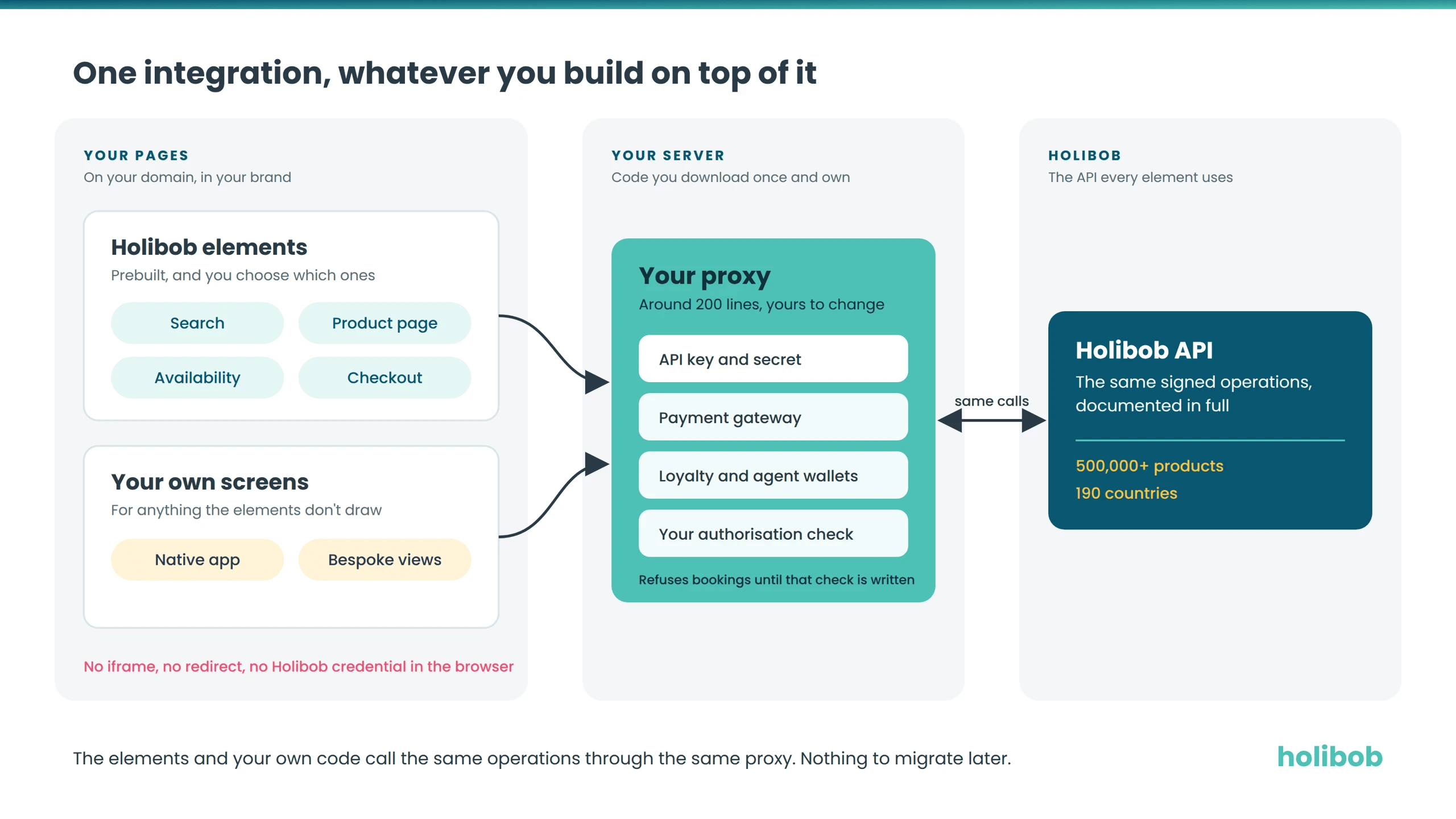
That was the design decision we argued about most while building it. Every Holibob element calls the same operations the API documents, through a proxy on your own server. You can use the whole storefront, take individual elements, or skip them and call the API yourself. If you outgrow the parts we've built, there's nothing to migrate.
He also suggests SDK makers should measure where developers leave the paved road, rather than how many start on it. We think he's right, and it's what we'll be watching.
Over the coming weeks we'll publish a build log: one engineer, our public documentation, a stopwatch, and a plain account of where it slowed down. The parts that don't flatter us go in too.
You don't have to wait for the build log to find out. The sandbox runs against our production systems, so a developer has the full catalogue, real availability and the whole booking flow on day one. Test cards act out success, failure and a bank challenge. Confirmation emails and vouchers go out as they would for a real booking, and cancellations and amendments work. Two things are held back: the supplier is never contacted, and nothing reaches a bank.
When a commercial agreement is in place, we clear the sandbox flag. The same credentials, proxy and code then take real bookings, so the three days your developer spends building is the whole engineering cost.
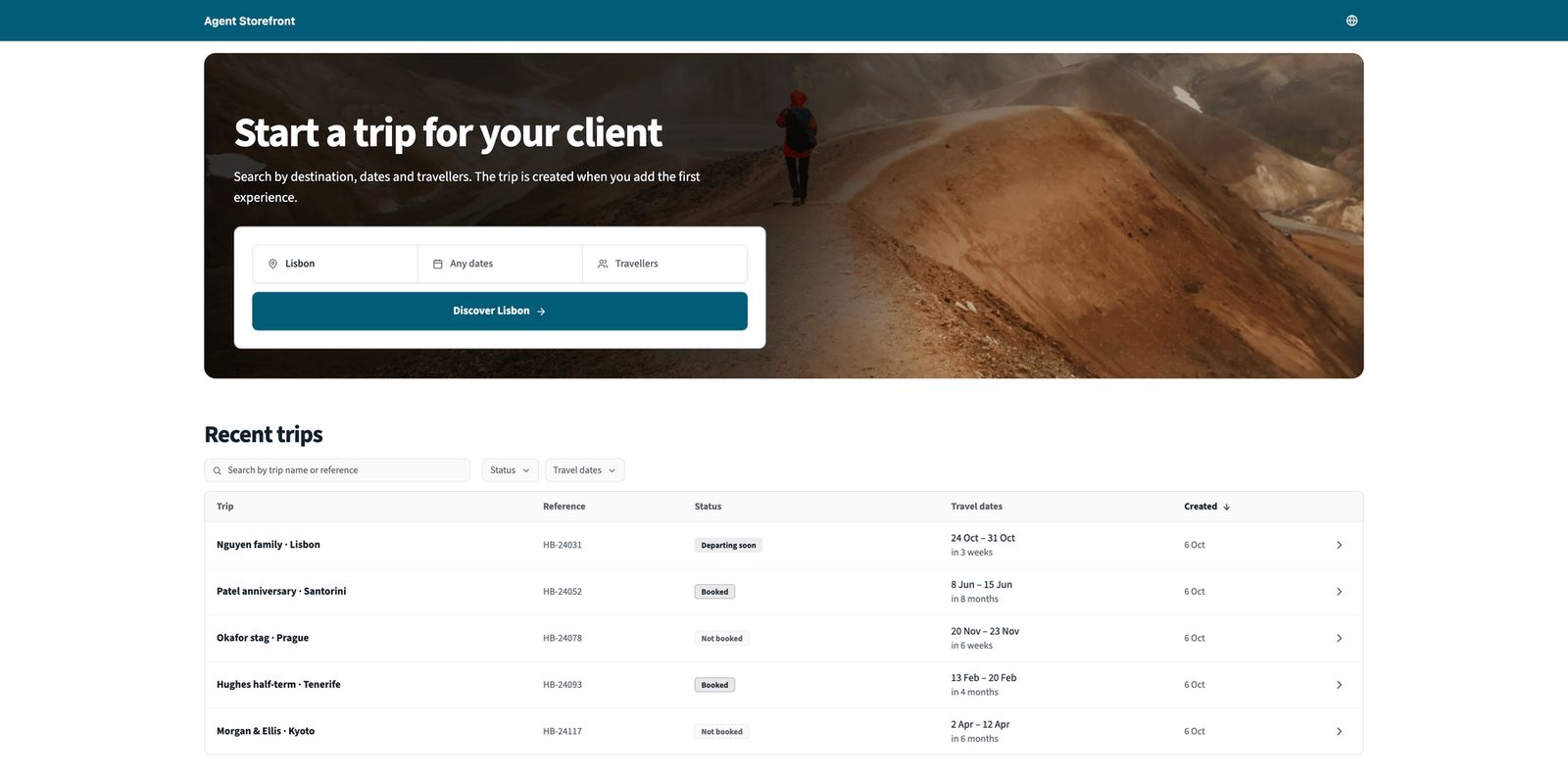
You can click through the storefront at demo.holibob.tech/solutions/holibob-sdk. For sandbox credentials, book fifteen minutes with us at holibob.tech/holibob-sdk, where you'll also find the FAQ.
Every piece from launch week, in the order it was published:
BlogHow Holibob's SDK Elements approach gives you the power of an API integration at the speed of a widget.
· Adin Mathitharan
 Blog
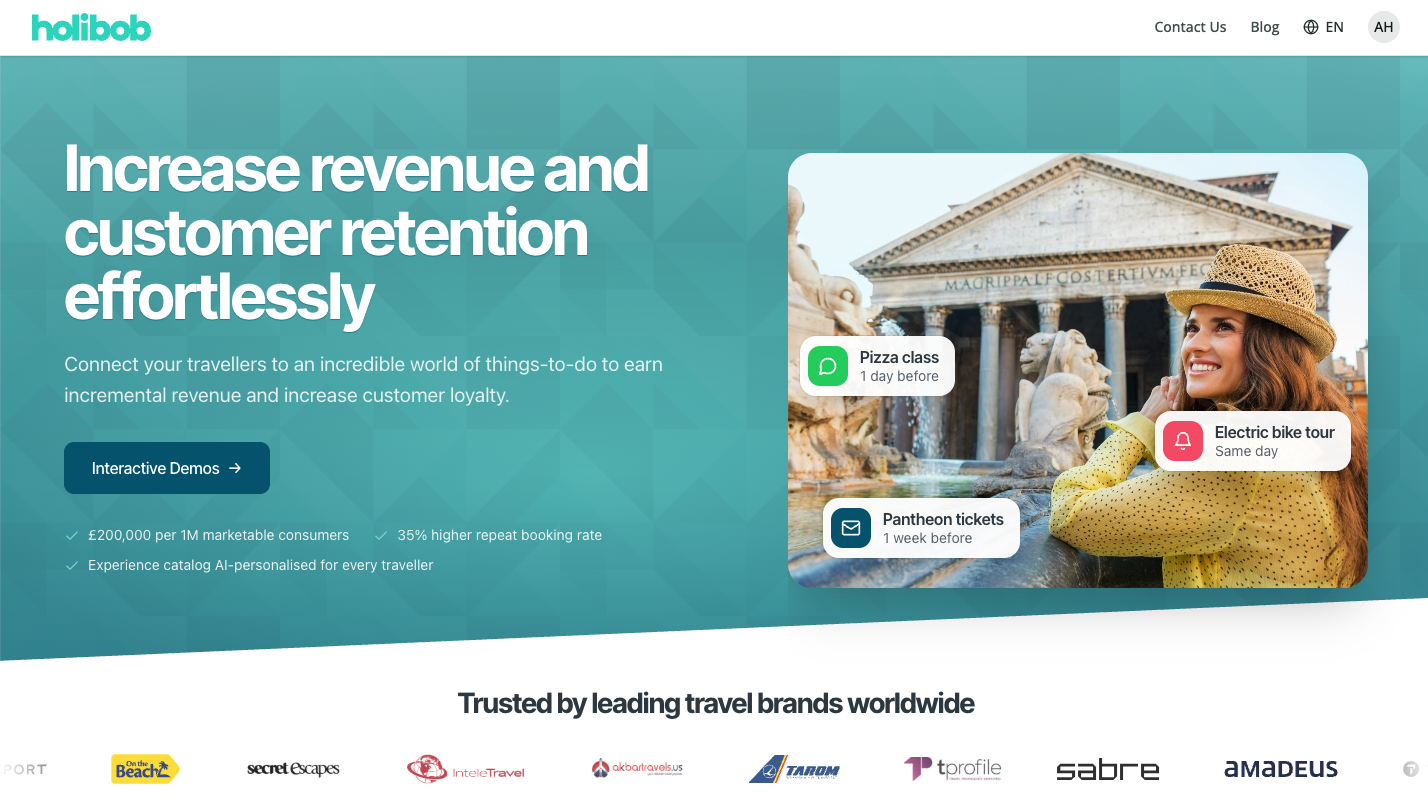
BlogToday we're launching a brand new holibob.tech. It's clearer, has a live demo site, and built around the showing what the untapped experience economy is worth to your brand.
· Angus Hardy
 Blog
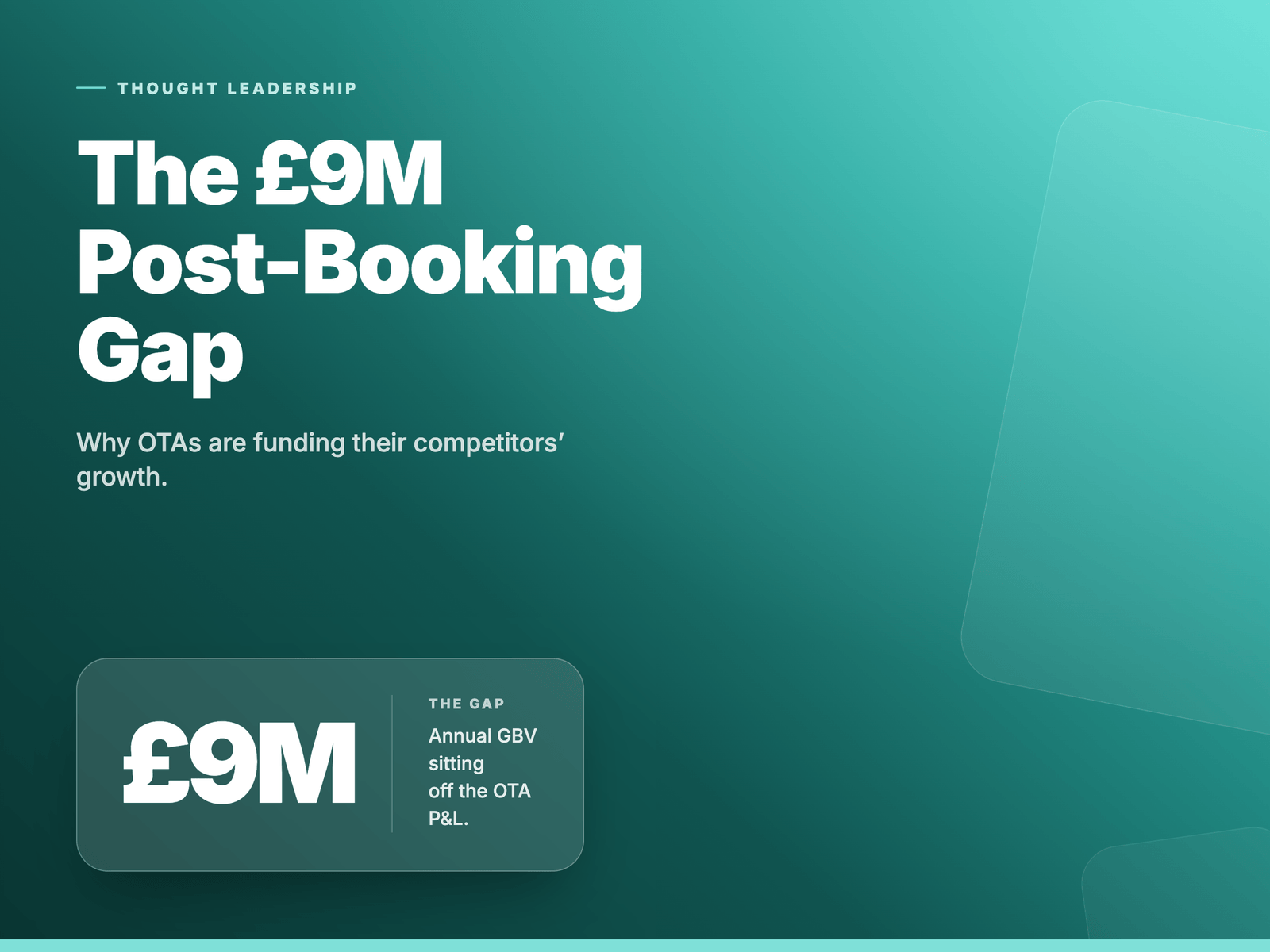
BlogOTA product teams understand the revenue case. Where most stall is not on the numbers — it is on the product question: what are the surfaces, what does each one take to activate, and what does each one earn? GetYourGuide doesn't wait for that question to be answered. Its retargeting pixel fires twelve minutes after your confirmation email. The post-booking window isn't sitting empty while the decision gets made. It's already occupied. We've helped launch on all four of the surfaces between booking confirmation and travel day. Here is what each one looks like in practice.
· Craig Everett